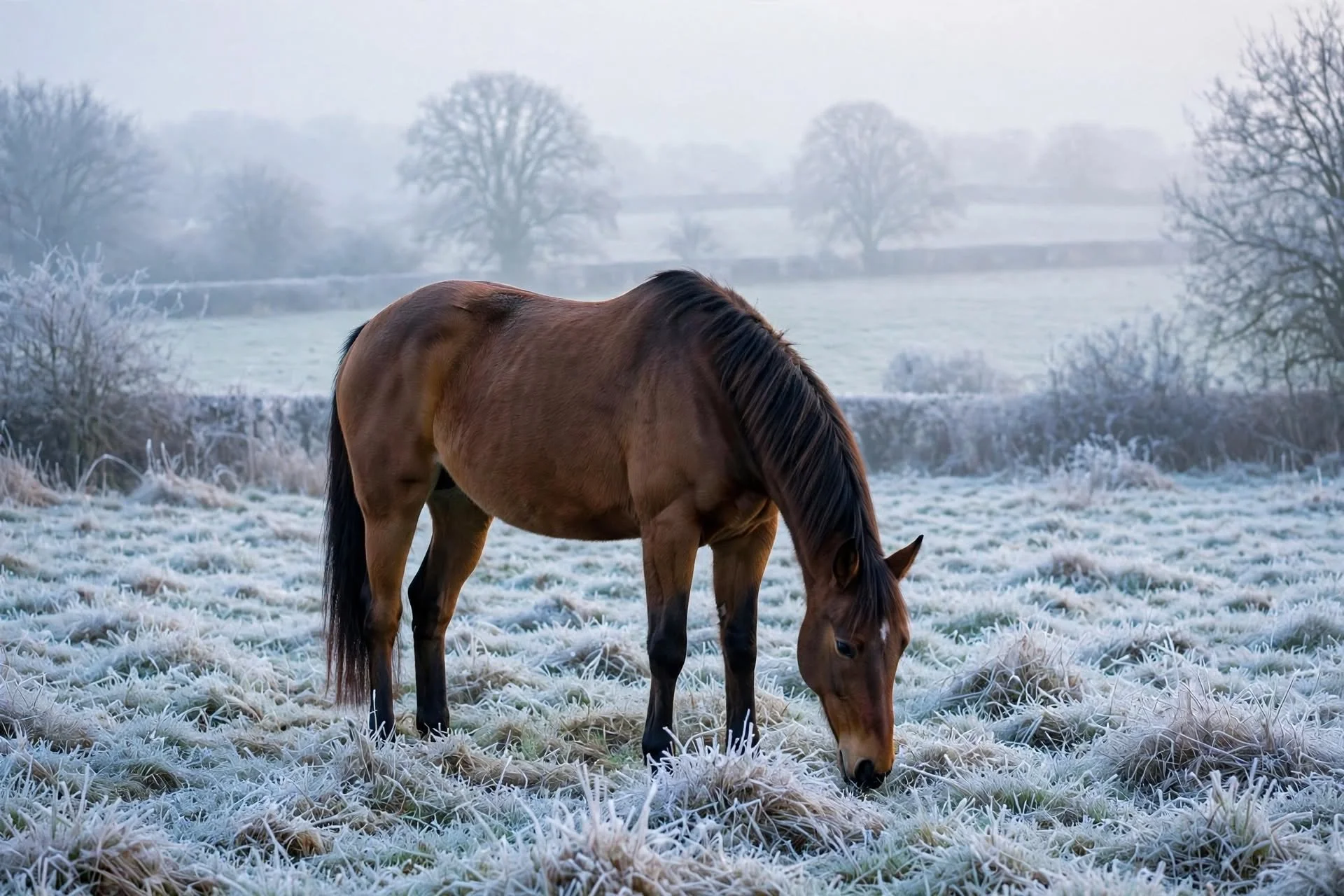
The answer is not necessarily! For most healthy horses, grazing frosty grass isn’t something to panic about. No good evidence shows that simply eating frosty grass causes colic or other digestive problems.
However, there’s something worth knowing, particularly if you own a horse or pony prone to laminitis. 🌞 Frosty mornings followed by sunshine can be a risky combination.
When grass is exposed to sunlight, it produces sugars through photosynthesis. Some of these sugars are stored as fructans (a type of soluble carbohydrate). In cold temperatures, grass growth slows, but it can continue to accumulate sugars. This means that grass exposed to bright sunshine after a cold, frosty night can contain elevated levels of sugars.
For horses and ponies susceptible to laminitis, grazing on grass with high sugar levels can increase the risk of an episode.
What should you do?
Be particularly cautious with laminitis-prone horses & ponies
Avoid assuming that frosty grass is automatically safe just because it’s winter
Take extra care following cold, sunny days
Follow your vet’s advice on grazing management if your horse has a history of laminitis